Let’s face it—school hasn’t changed much in the last 20 years. While the world races ahead with artificial intelligence, robotics, and virtual reality, many classrooms still have worksheets, textbooks, and rigid routines. That’s not going to cut it for the future workforce.
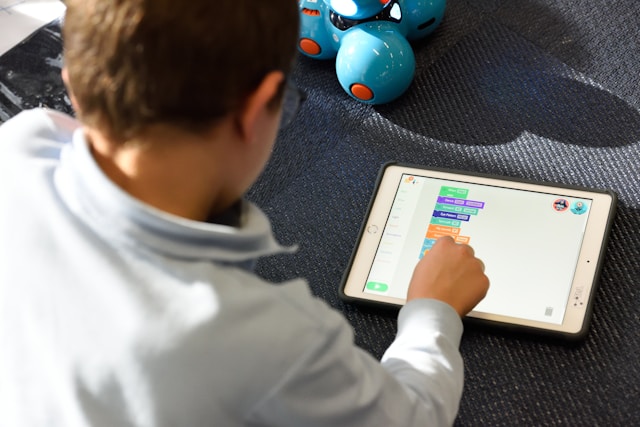
Kids need more than just traditional skills. They need to think creatively, solve real-world problems, and adapt quickly. The current system often misses the mark when it comes to preparing them for the digital future ahead. That’s why introducing children to coding at a young age is more important than ever.
Table of Contents
- Coding Builds the Brainpower for Tomorrow
- How Does Coding Actually Prepare Kids?
- It Enhances Creativity and Problem-Solving Skills
- It Strengthens Math and Logical Reasoning
- It Encourages Independent Thinking and Self-Learning
- It Prepares Them for Careers We Haven’t Even Imagined Yet
- Let’s Build Future-Ready Kids
Coding Builds the Brainpower for Tomorrow
Think about this: our kids will be entering a world where automation, machine learning, and data structures are the norm. Jobs that exist today might disappear tomorrow. And the jobs of tomorrow? They haven’t even been invented yet.
Without foundational skills and digital literacy, kids risk falling behind. They might struggle to keep up—not just academically, but socially and professionally too. This isn’t just about being good with computers. It’s about understanding how the world works and how they can shape it.
Learning to code is like giving your child power. It’s not just about writing lines of code—it’s about developing a mindset—a way of thinking that helps them approach complex problems, think critically, and build creative solutions from scratch.
How Does Coding Actually Prepare Kids?
Coding teaches more than technical skills. It teaches real-world thinking, practical problem-solving skills, and resilience, all of which are essential for success in tomorrow’s tech industry and future career opportunities.
When kids get involved in coding for kids, something shifts. They stop being afraid of failure. They become curious about how things work. They start building their own games, apps, and animations—and they do it all while learning logic, sequencing, and math in the background.
That’s a major leap beyond what they learn in school. Coding prepares kids to be problem solvers with real-world applications in mind. It’s how they gain coding skills and problem-solving abilities that stick for life.
It Enhances Creativity and Problem-Solving Skills
Ever watched a child get frustrated with a tricky homework question? Now imagine them getting stuck in a code they wrote themselves—only this time, they don’t give up. Instead, they go back, tweak it, test it, and try again. That’s the kind of mindset coding projects develop.
Coding teaches that mistakes are just part of the iterative process. Fostering creativity can come from testing, trial, and error. At Software Academy, our students are encouraged to experiment, to play with code like it’s LEGO, and to see failure as a stepping stone.
Creativity isn’t just for art class anymore—it’s the backbone of innovation. Coding gives kids the tools to bring their ideas to life through many projects that challenge them to think big and try again.
It Strengthens Math and Logical Reasoning
Here’s a little secret: kids learn a ton of math when they’re coding, but they rarely notice it. Why? Because they’re using it to build something fun. Whether they’re designing a game or programming a robot, they’re using math and logical reasoning in real time to make things happen.
Variables, patterns, sequences, and efficient solutions all come into play. But instead of staring at a worksheet, they’re making a character jump or score a goal in a game they built themselves.
At Software Academy, coding classes are designed to sneak math and logic in through the backdoor—without making kids feel like they’re doing “boring math work.” And it works. It lays the groundwork for critical thinking skills kids will use for years to come.
It Encourages Independent Thinking and Self-Learning
The future of education isn’t just about memorising facts. It’s about learning how to learn. And coding is one of the best tools for teaching that skill.
When children learn computer programming, they don’t wait for someone to give them all the answers. They explore, test, and figure things out on their own. That kind of self-learning builds confidence—and more importantly, it builds a habit.
It Prepares Them for Careers We Haven’t Even Imagined Yet
Let’s be real—by the time today’s kids are adults, the future job market will look totally different. We’re talking AI trainers, virtual architects, drone programmers, tech ethicists—roles we can’t even define yet.
But one thing’s for sure: digital literacy and programming skills will be a must. Coding prepares kids to navigate and lead in this evolving world.
By giving kids early exposure to computer science and programming languages, you’re not pushing them into a “tech-only” future—you’re opening doors to endless opportunities. Whether they become artists, doctors, engineers, or entrepreneurs, they’ll be more prepared to thrive in a digital world.
Let’s Build Future-Ready Kids
The world is changing fast, and our kids need tools that prepare them to not just keep up but lead. Teaching coding education is one of the best gifts we can give them.
Coding is more than just a skill. It’s a mindset that fosters communication skills, critical thinking, computational thinking, and innovation. Whether your child is 6 or 17, coding equips kids with the kind of skills they’ll need for life.
And with Software Academy, they’ll be learning in an environment that celebrates exploration, imagination, and real progress. Because when you see how coding prepares kids to become confident problem solvers with a growth mindset and strong literacy skills, it’s easy to imagine their bright future in the digital world.